
AGARWOOD MARKET SEGMENTATION: THE “KEY” TO RESTRUCTURING THE VALUE CHAIN TOWARDS HIGH TECHNOLOGY
VAWA - In the context of a sharp decline in natural agarwood sources and increasingly differentiated global demand, identifying the right customer segment is no longer just a marketing problem but has become the "guiding principle" for the entire agarwood industry value chain – from cultivation and agarwood induction to deep processing and commercialization.
AGARWOOD MARKET SEGMENTATION: THE “KEY” TO RESTRUCTURING THE VALUE CHAIN TOWARDS HIGH TECHNOLOGY
(VOV.VN) – In the context of a sharp decline in natural agarwood resources and increasingly diversified global demand, identifying the right customer segments is no longer a simple marketing puzzle but has become a “compass” guiding the entire agarwood industry value chain – from cultivation and agarwood induction to deep processing and commercialization.)
A billion-dollar market but with limited added value
According to international reports on the natural fragrance and medicinal materials industry, the global agarwood market currently reaches a scale of approximately 6–8 billion USD per year, with an average growth rate of 5–7%/year. Demand is concentrated in regions such as the Middle East, China, Japan, and parts of Europe – where agarwood is used in religion, medicine, and the luxury perfume industry.
However, a paradox exists: although Vietnam possesses some of the world's best growing conditions for Aquilaria trees, export value still mainly stops at raw materials or semi-processed products, with low profit margins.
The core reason pointed out by experts lies not in production volume, but in the lack of a clear market segmentation strategy, leading to production that is not linked to the specific needs of each customer group.
6 market segments and distinct requirements
Value chain surveys show that the agarwood market can be divided into 6 main segments, each corresponding to a specific technical standard and value system.
The mass consumption and spiritual segment currently accounts for the largest share of production volume, including agarwood incense, agarwood powder, and agarwood pieces. This is a market with stable demand, especially in Asia, but profit margins only fluctuate between 10–20%. The main role of this segment is to consume low-grade raw materials, creating stable cash flow for businesses.
Conversely, the high-tech extraction segment (essential oil, agarwood extract, bioactive compounds) offers outstanding added value. One liter of high-quality agarwood essential oil can reach a price of 20,000–40,000 USD, or even higher if it meets luxury perfume standards. This segment requires strict control of chemical indicators such as Sesquiterpenes and Chromones, as well as a modern extraction technology platform.
The mid-to-high-end technical segment, such as Tigerwood and Maroki, plays an intermediary role, using processing technology to upgrade the value of agarwood. Products target the Middle Eastern market – where there are high requirements for uniformity and stable supply.
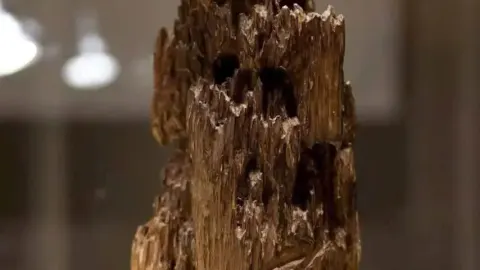
Meanwhile, the artistic and identity segment represents the “pinnacle of value,” focusing on ornamental agarwood, artistic statues, and high-end jewelry. The value of each product lies not only in the essential oil content but also in its uniqueness, aesthetics, and feng shui elements. A special piece can reach prices from tens of thousands to millions of USD.
Additionally, the functional food and medicine segment is emerging as a long-term direction, with a growth rate of over 8%/year in markets such as South Korea and Japan. However, this field requires standardization of raw materials and rigorous scientific verification – an area where Vietnamese enterprises are still limited.
Market Segmentation: From “selling what is available” to “producing according to demand”
According to forestry economics experts, the key point of a market segmentation strategy lies not in the consumption stage, but in orienting production from the very beginning.
An Aquilaria tree after harvesting can create many different product lines:
Low-oil wood → production of incense, agarwood powder, extracts
Medium-oil wood → technical products (Tigerwood, Maroki)
High-oil wood, beautiful grain → artistic crafts, ornamental agarwood
Without a segmentation strategy, most raw materials will be “homogenized” into low-priced products. Conversely, when correctly classified according to market demand, businesses can increase the value of each agarwood tree many times over, while minimizing resource waste.
R&D Orientation and Value Chain Restructuring
Identifying customer segments also plays a decisive role in research and development (R&D) activities.
In reality, each segment requires a different technological system:
Medicinal materials, essential oil → extraction technology, chemical analysis
Artistic crafts → agarwood induction techniques with morphological control
Functional foods → biotechnology and safety standards
This forces businesses to shift from a “plant – harvest” mindset to a “product design – quality control – value optimization” mindset.
Marketing Strategy: No “one-size-fits-all formula”
One of the current weaknesses of the Vietnamese agarwood industry is the lack of clear separation between two market groups:
B2B (Business-to-Business): requires international certification, scientific data, and traceability
B2C (Business-to-Consumer): requires brand storytelling, cultural elements, and emotional experiences
Using a common approach for both groups not only reduces marketing effectiveness but also limits the ability to penetrate international markets.
Conclusion: A “Compass” for Sustainable Development
In the context of increasingly fierce global competition and the gradual depletion of natural resources, the Vietnamese agarwood industry faces an urgent need for restructuring.
A market segmentation strategy not only helps:
Optimize the supply chain
Orient technology investment
Increase surplus value
but also creates a foundation for businesses to proactively adapt to market fluctuations.
In the long term, if implemented systematically, Vietnam can completely transition from the role of a “raw material supplier” to a center for deep processing and agarwood valuation in the global value chain.
Thảo luận (0)
✦ Hội Trầm Hương Việt Nam ✦
Join the agarwood community discussion
Comment, share, and connect with 50+ agarwood industry businesses. Register for free to become a member of the Vietnam Agarwood Association.