
VIETNAM AGARWOOD ASSOCIATION ORGANIZED "EXPERIMENT ON AGARWOOD INOCULATION ON AQUILARIA CRASSNA TREES"
VAWA - VIETNAM AGARWOOD ASSOCIATION ORGANIZED "EXPERIMENT ON AGARWOOD INOCULATION ON AQUILARIA CRASSNA TREES (Aquilaria crassna Pierre ex. Lecomte) IN TAN AN HAMLET, PHUOC TAN COMMUNE, DISTRICT…
Vietnam Agarwood Association implements agarwood inoculation experiment on Aquilaria crassna trees in Bà Rịa – Vũng Tàu
To gradually clarify the scientific basis and perfect the technical process of creating cultivated agarwood, the Vietnam Agarwood Association has implemented the program “Experiment on agarwood inoculation on Aquilaria crassna trees (Aquilaria crassna Pierre ex. Lecomte)” in Tân An hamlet, Phước Tân commune, Xuyên Mộc district, Bà Rịa – Vũng Tàu province during the 2023–2028 period.
According to experts, the process of agarwood formation has long been explained through many hypotheses, in which most scientists believe that agarwood is created due to the tree's pathological reaction to agents such as microorganisms, insects, chemicals, or mechanical damage. However, in Vietnam, research is still fragmented, lacking systematicity, and has not been widely published, causing the development of the agarwood industry to be disproportionate to its potential.
Faced with that reality, the Vietnam Agarwood Association issued Decision No. 41/QĐ-VAWA dated August 28, 2023, officially allowing the implementation of a 5-year experimental model. The goal of the program is to select effective technical methods and inoculation preparations, thereby building a scientific basis for the sustainable development of the domestic agarwood industry.
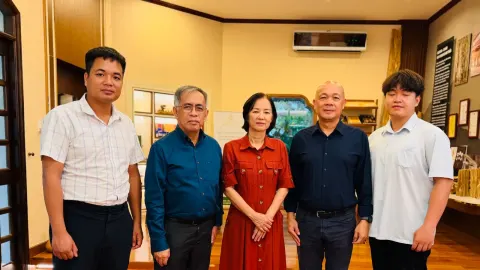
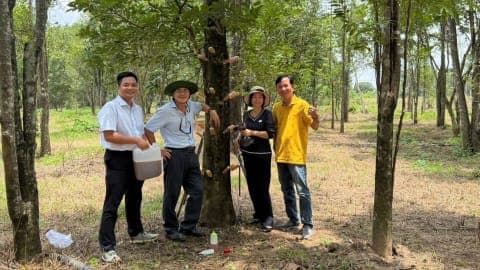
On August 31, 2023, at the Aquilaria garden of Ms. Nguyễn Thị Thu (Tân An hamlet, Phước Tân commune, Xuyên Mộc district), the experimental program was organized with the participation of Association leaders along with many organizations and individuals who are members and Executive Board members. Activities were closely monitored to ensure objectivity and transparency throughout the implementation process.
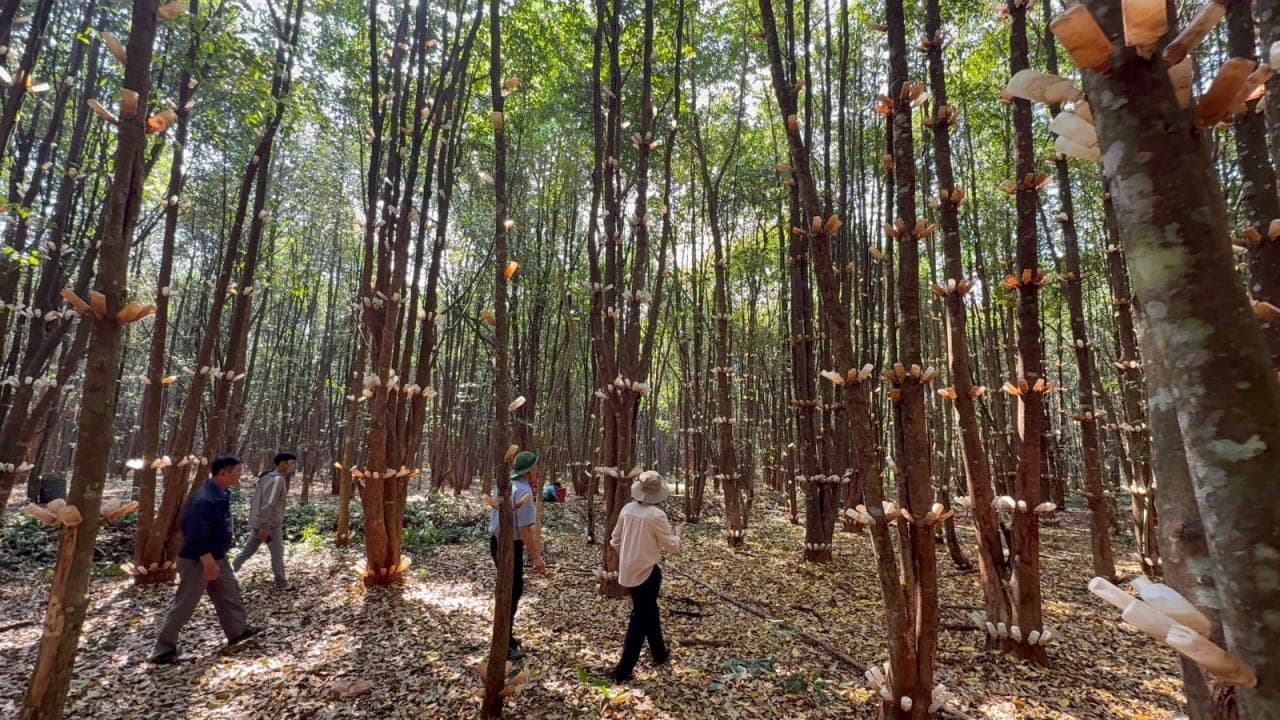
Participating units applied many different methods such as drilling the tree trunk to inject microbial preparations, enzymes, probiotics; or peeling the bark and applying chemical preparations to the tree. Each method was tested on a scale of 5 Aquilaria trees to compare and evaluate actual effectiveness. The types of preparations used were also diverse, including microorganisms, fungi, plant growth regulators, and chemical compounds.
Notably, all preparation samples were collected and stored by the Association according to regulations for long-term monitoring and evaluation. This is considered an important step to standardize technical processes and limit spontaneous, uncontrolled development as in the past.
According to the Association representative, besides the technical problem, the major challenge of the agarwood industry today also lies in the consumption market, especially for cultivated agarwood products. Therefore, the results of the experimental program not only contribute to perfecting the production process but also serve as a basis for proposing policies and market development orientations in a sustainable way.
The implementation of a methodical large-scale experiment with the participation of many units and experts is expected to create a positive shift for the Vietnam agarwood industry, aiming at the goal of enhancing economic value and asserting its position in the international market.