
Vietnam Agarwood Association proposes standardizing the billion-dollar industry
VAWA - On August 14, in Ho Chi Minh City, the 2026 National Productivity and Quality Forum was held with the participation of leaders from the Government, ministries, localities, international organizations, experts, scientists, associations, and the business community.
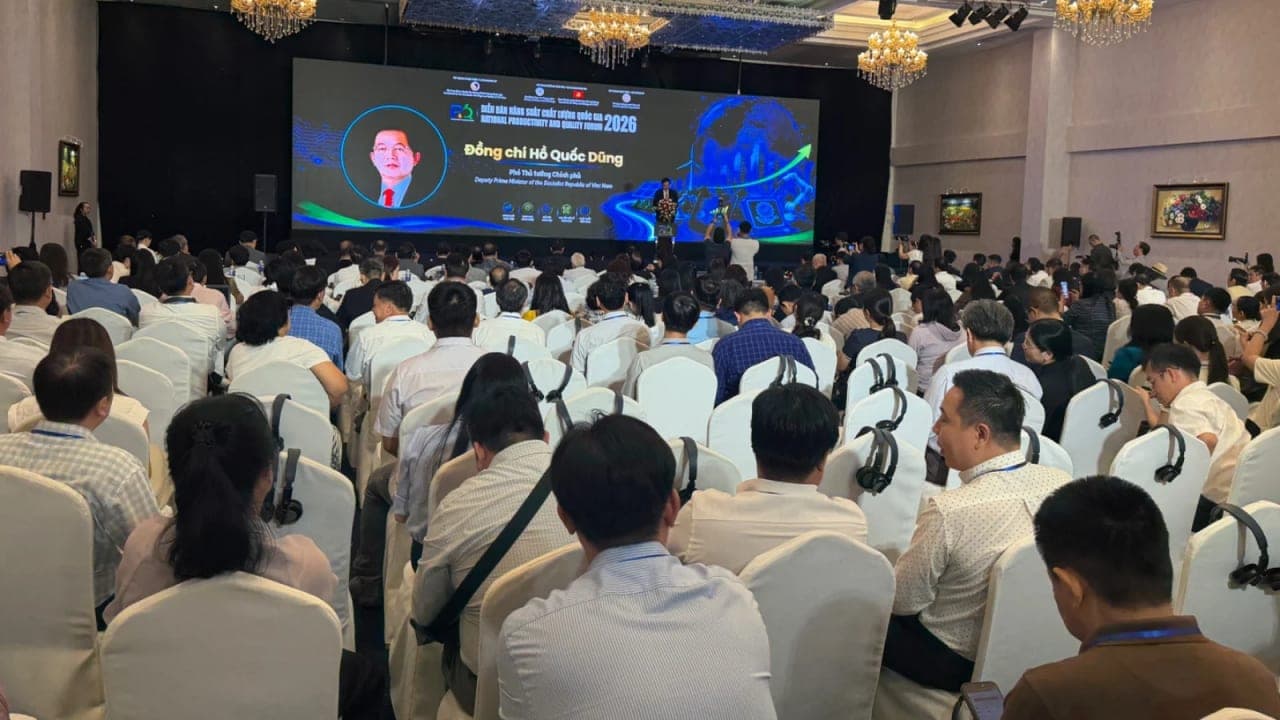
This is a national-level event hosted by the Ministry of Science and Technology and assigned to the Directorate for Standards, Metrology and Quality of Vietnam to organize. Deputy Prime Minister Hồ Quốc Dũng attended and delivered a keynote speech at the Forum.
Under the theme "Breaking through productivity based on science, technology, innovation, and digital transformation for Vietnam to advance rapidly towards the 2045 Vision," the Forum is expected to become an important policy dialogue space, contributing to identifying bottlenecks in the economy and proposing solutions to enhance national productivity, quality, added value, and competitiveness.
The program consists of four thematic seminars and one plenary session, focusing on major topics such as science, technology, and innovation policies; digital transformation and artificial intelligence; green productivity tied to ESG models; and innovation and advanced management systems.
Beyond discussing large-scale industries, the Forum also opens opportunities for specialized economic sectors based on indigenous resources and traditional knowledge to present their difficulties, policy gaps, and development aspirations. Among them, the Vietnamese agarwood industry is a typical case.
Possessing precious products but lacking a standardized ecosystem
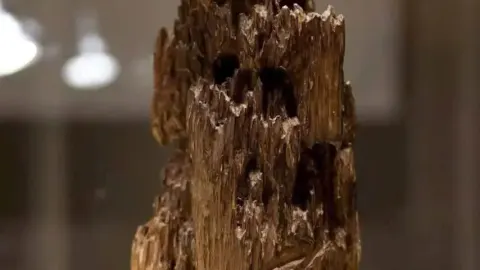
In a submitted presentation and recommendation document to the National Productivity and Quality Forum 2026, the Vietnam Agarwood Association stated that agarwood is an endemic product of special cultural, ecological, and commercial value.
Vietnam has advantages in Aquilaria trees, numerous raw material regions, an experienced team of artisans, and agarwood-induction methods accumulated over generations. However, these natural advantages have not been fully transformed into high productivity, stable quality, and a commensurate position in the international market.
According to the Vietnam Agarwood Association, the agarwood industry is facing a thought-provoking paradox: it has precious trees, skilled practitioners, and a vast market, yet lacks a sufficiently strong science-technology, standards, and data ecosystem to organize the value chain.
In many plantation areas, agarwood induction activities still heavily rely on experience, mechanical methods, or isolated processes. Consequently, the proportion of agarwood-yielding trees, yield recovery, and the quality of aromatic compounds vary significantly.
Even with the same Aquilaria variety, differences in soil, tree age, time of intervention, treatment agents, and care processes can lead to completely different results. Meanwhile, growers must invest capital, land, and effort for many years while finding it difficult to forecast output, quality, and recovery value.
The Association believes that productivity in the agarwood industry cannot simply be understood as producing more agarwood in a shorter time. Productivity must be measured across the entire value chain, from survival rate, agarwood induction rate, volume of standard products, distillation efficiency, to the value gained per tree, per hectare, and per labor hour.
Enhancing productivity must also be tied to protecting soil, genetic resources, the ecological environment, and the long-term livelihoods of growers.
Standard gaps erode the value of Vietnamese agarwood
One of the biggest bottlenecks currently, according to the Vietnam Agarwood Association, is that the agarwood industry still lacks a unified reference system to classify and evaluate the quality of various product groups, especially agarwood essential oil.
In the market, businesses are using various grading methods such as A, A+, AAA, Super, or Deluxe. However, behind these eye-catching names, there is still no common quality threshold for verification and comparison.
Some businesses have conducted chemical composition analysis using GC-MS methods, but the selection of indicator compounds, testing methods, and quality thresholds remain fragmented. This makes it difficult for consumers to distinguish genuine from fake products, for serious businesses to protect their reputation, and for regulatory authorities to control mixed or substandard products.
When exporting, Vietnamese businesses often have to accept the reference system set by buyers and easily fall into a disadvantageous negotiating position. A product of high value that is not identified, measured, and described by scientific data can hardly become a national brand commodity.
If these gaps are not overcome soon, Vietnam risks continuing to remain in the position of supplying raw materials or primary processed products, while the largest share of value belongs to testing, deep processing, branding, and international distribution stages.
Digital transformation must start from every Aquilaria tree
In the document sent to the Forum, the Vietnam Agarwood Association also stated that digital transformation in the industry cannot stop at social media promotion, website building, or online sales.
The core of digital transformation must be the formation of data profiles for each planting region, orchard, and product batch. This profile must reflect the seed source, planting area coordinates, tree age, care log, agarwood-induction method, harvesting time, test results, processing facility, and the journey of the shipment.
A unified data system will help growers and businesses reduce documentation completion costs; support regulatory agencies in verifying origins; create a basis for orchard valuation; and simultaneously help buyers check product journeys.
This is also the foundation for applying artificial intelligence in forecasting agarwood formation capability, quality classification, anomaly detection, and production process optimization.
However, the Association notes that a nice QR code cannot replace a legal forest product profile. Blockchain technology cannot turn inaccurate input data into reliable data either. Therefore, digital transformation must go hand in hand with data standards, verification mechanisms, the responsibilities of information providers, and the data protection requirements of growers and businesses.
Six recommendations for developing the agarwood industry
From the practical experiences of members, farmers, and businesses, the Vietnam Agarwood Association recommends that the Forum and functional agencies consider six key groups of solutions.
First, build a national or inter-disciplinary science and technology program on Aquilaria trees and agarwood, comprehensively researching from genetic resources, seeds, cultivation techniques, agarwood-induction technology to deep processing and product safety assessment.
Second, form a shared database on planting regions, ecological conditions, technical processes, chemical compositions, and agarwood quality; select representative regions to build baseline datasets.
Third, soon establish national standards for priority product groups such as agarwood raw materials, essential oils, incense, and deep-processed products. Standards should combine the sensory experience of artisans with measurable indicators such as species origin, planting region, moisture content, density, refractive index, chemical composition, residue safety, and traceability.
Fourth, implement pilot linkage models among the State, scientists, businesses, and farmers. All agarwood-induction technologies must be independently tested, with clearly published application conditions, costs, efficiency, and risks before scaling up.
Fifth, deploy a digital traceability platform linked with planting area codes, legal forest product profiles, and CITES requirements; establish mechanisms to support farming households, cooperatives, and small businesses in accessing technology at reasonable costs.
Sixth, encourage deep processing, design innovation, and the development of products with high scientific, technological, and knowledge content; while protecting genetic resources, natural forests, the environment, and the legitimate rights of the people.
Need to perceive agarwood as a bio-economy sector
The Vietnam Agarwood Association wishes for the Ministry of Science and Technology and relevant ministries and sectors to perceive agarwood not merely as a specialized forest product commodity, but as a bio-economy sector capable of connecting agriculture, the fragrance and flavor industry, pharmaceuticals, cosmetics, handicrafts, cultural tourism, and international trade.
The Association commits to acting as a focal point to aggregate the needs of farmers and businesses; coordinating with regulatory agencies, research institutes, universities, and standardization organizations to build data, select pilot models, review processes, and disseminate results to members.
The Association is also ready to participate in building codes of good practice, traceability systems, and transparent product identification mechanisms, thereby gradually bringing Vietnamese agarwood to participate more deeply in the global value chain.
Aquilaria trees take many years to form agarwood. A sustainable economic sector cannot be formed from short-term successes either. But if started with correct data, verified technology, reliable standards, and substantive linkages, each Aquilaria tree can not only produce a precious product but also create knowledge, employment, livelihoods, and a national brand.
Enhancing the productivity of the agarwood industry does not mean exploiting faster, but creating greater value from fewer resources, with more stable, transparent, and responsible quality. That is also the message that the Vietnam Agarwood Association sends to the National Productivity and Quality Forum 2026.
Thảo luận (0)
✦ Hội Trầm Hương Việt Nam ✦
Join the agarwood community discussion
Comment, share, and connect with 50+ agarwood industry businesses. Register for free to become a member of the Vietnam Agarwood Association.