
Hà Tĩnh paves the way to turn Aquilaria trees into a high-value industry
VAWA - With the establishment of an interdisciplinary working group, Ha Tinh is shifting its approach to the aquilaria tree: from a livelihood based largely on experience to an industry with planning, science, traceability, intellectual property, and market linkages.
Nguyễn Tùng
With the establishment of the interdisciplinary working group, Hà Tĩnh is shifting its approach to the aquilaria tree: from a livelihood heavily reliant on experience to a structured industry with planning, science, traceability, intellectual property, and market linkages.
On June 30, 2026, the Chairman of the People's Committee of Hà Tĩnh Province, Phan Thiên Định, signed Decision No. 1479/QĐ-UBND establishing an interdisciplinary working group to support the development of aquilaria trees in the province.
On the surface, this is simply an organizational decision to manage a specific production sector. However, when viewed through the lens of agricultural restructuring, enhancing forest product value, and building sustainable livelihoods, this decision carries a deeper significance: Hà Tĩnh is beginning to integrate the aquilaria tree into a development framework guided by the State, supported by science, and connected to the market.
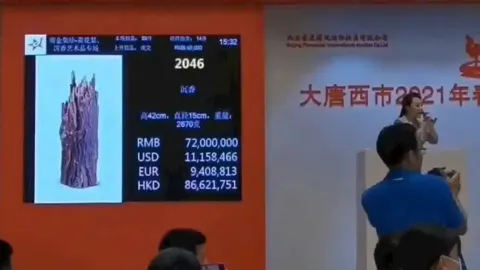
The value of the aquilaria tree does not lie merely in its wood, but is built through an entire process spanning from seedlings, site conditions, agarwood-inducing techniques, harvesting, and processing to establishing legal origin. When the entire chain is standardized, agarwood can become a unique product with economic, cultural, and commercial value that extends far beyond local boundaries.
From Natural Advantages to the Need for Industry Restructuring
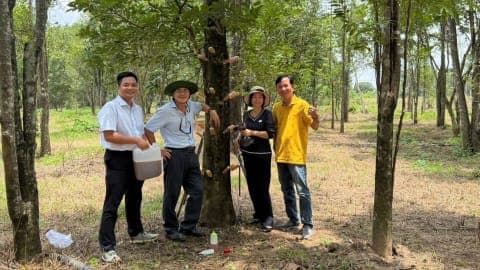
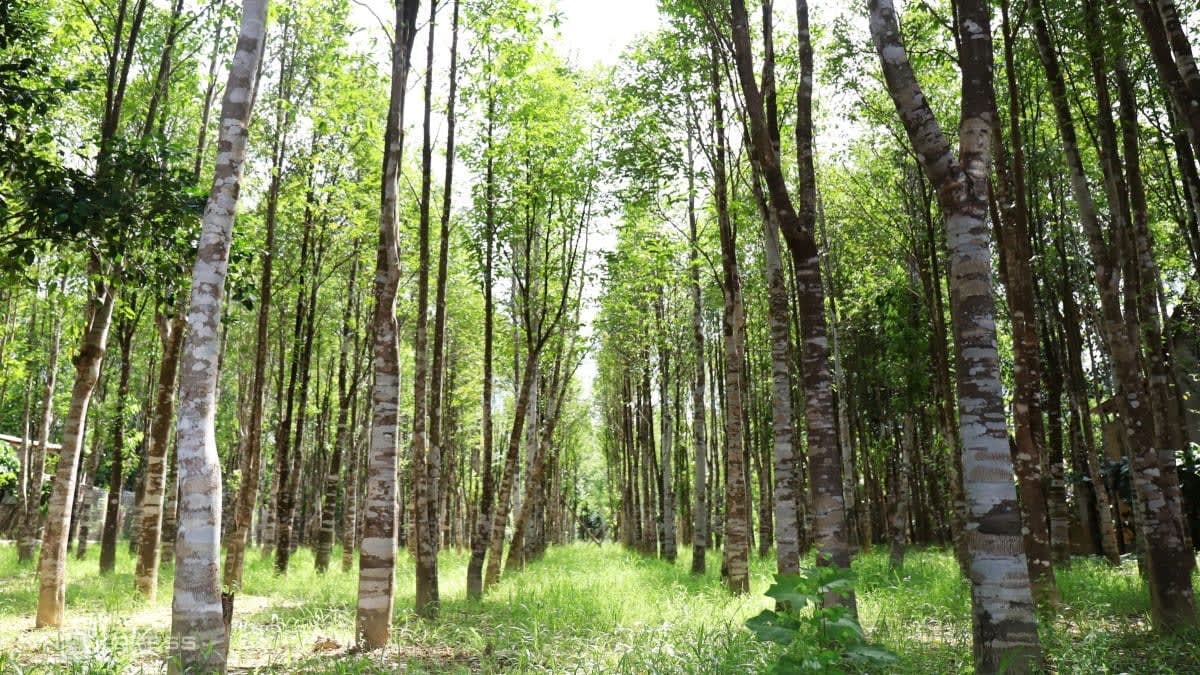
According to information released by the People's Committee of Hà Tĩnh Province, the entire province currently has about 2,700 hectares of agarwood-producing aquilaria with nearly 3 million trees, concentrated mainly in the former Hương Khê area. The Phúc Trạch agarwood crafting village has gradually taken shape, creating jobs and bringing significant income to local residents. Hà Tĩnh Department of Agriculture and Environment Portal
Specifically, Phúc Trạch currently has about 1,000 hectares of aquilaria trees, with annual revenue estimated by the local government at around 200 billion VND. From a once-impoverished countryside, Phúc Trạch has become a prominent name on the agarwood map of Vietnam. Hà Tĩnh Province Electronic Information Portal
However, a large cultivation area does not automatically translate into a strong industry. Local reports themselves have pointed out several bottlenecks: production remains fragmented; the development of aquilaria trees is spontaneous in some areas; technical processes are inconsistent; the market is still heavily focused on seedlings and semi-processed products; and linkages among growers, processing facilities, distribution enterprises, and research units remain weak.
The gap between 'an area with many aquilaria trees' and 'a branded agarwood hub' lies in the capacity to organize the value chain. If farmers only sell trees or raw materials, the largest share of value will fall to the crafting, branding, and distribution stages. Therefore, the issue is not just how many more hectares are planted, but how each hectare of aquilaria is managed and commercialized.
A Single Working Group with a Comprehensive Scope over the Entire Value Chain
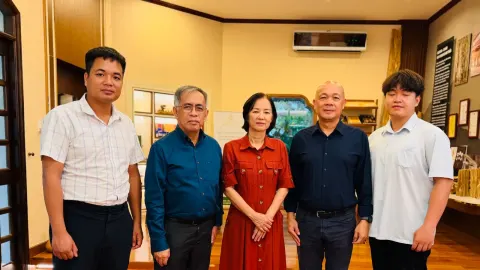
According to Decision 1479, the Working Group consists of 16 members, with the Vice Chairman of the People's Committee of Hà Tĩnh Province, Hồ Huy Thành, serving as the Chairman.
Members come from the Forestry and Forest Protection Department, the CITES Management Authority of Vietnam, specialized units under the Ministry of Agriculture and Environment, the Vietnam National University of Forestry, the Department of Agriculture and Environment, the Department of Science and Technology, the Department of Industry and Trade, the Department of Finance, the Non-Timber Forest Products Research Center, local authorities of cultivation areas, and business representatives.
This structure shows that Hà Tĩnh does not view the aquilaria tree solely as a forestry issue. To establish a full-fledged industry, the province must simultaneously address technical, legal, forest product origin, intellectual property, processing, commercial, and livelihood challenges.
The Working Group is tasked with guiding local authorities to orient the development of aquilaria trees in association with harvesting, processing, and consumption tailored to various scales; coordinating the formulation and guidance of technical processes from planting, care, pest control, and agarwood induction to deep processing; while resolving bottlenecks in the documentation for verifying the legal origin of products.
Agarwood is highly valuable but its quality is difficult to identify through ordinary observation. In the absence of standards and origin documentation, the market easily falls into a state of confusion between genuine and counterfeit products, leaving honest businesses to suffer and eroding the reputation of the cultivation region.
Traceability, therefore, is not an administrative hurdle designed to complicate life for producers. It is the very 'passport' for agarwood to enter modern distribution systems and international markets.
To Go Far, Products Must Have an Identity
Another notable task is to survey and establish geographical indications for the aquilaria tree; secure protection rights linked to specific geographical areas; complete dossiers for the Intellectual Property Office of Viet Nam to appraise and grant certificates in accordance with regulations; and propose the implementation of related scientific tasks.
This addresses a key weakness of many Vietnamese specialties: possessing precious products but lacking a sufficiently strong 'identity'. A locality only becomes a brand when its unique quality is proven, its raw material area is demarcated, its processes are controlled, and its name is legally protected.
For agarwood, a geographical indication is not as simple as putting the name Hà Tĩnh or Phúc Trạch on the packaging. This process must identify the conditions that create the difference, the indicators reflecting quality, the boundaries of the production area, and the mechanism for controlling the use of the name.
Once established, the geographical indication will serve as a quality governance institution rather than just a promotional tool: growers will have the opportunity to sell their products at higher values, businesses will secure a stable source of raw materials, and the locality will protect the reputation of its production region.
The participation of the CITES Management Authority of Vietnam is also of great significance. Species of the genus Aquilaria that produce agarwood fall under the regulatory scope of the CITES Convention. Therefore, if Hà Tĩnh wishes to expand its market, it cannot merely sell the story of a precious specialty; the locality must prove that its products are of legal origin, verifiable, and compliant with the regulations of import markets. CITES Guidance Document
Growers Cannot Be Left Out of the Largest Share of Value
The Decision of the People's Committee of Hà Tĩnh Province also tasks the Working Group with supporting trade promotion, marketing products processed from aquilaria trees, and developing the value chain from production to processing and consumption.
At the same time, local authorities, cooperatives, organizations, and individuals are guided to participate in linkage programs with farming households to develop the economy and achieve sustainable poverty reduction.
An industry is only meaningful when the added value flows back to the raw material region. If growers must bear risks for many years only to sell raw materials at volatile prices, while profits are concentrated in the trading stage, that chain is unlikely to be sustainable.
Therefore, Hà Tĩnh needs to promote cooperatives and contract-based linkages; publicize grading and purchasing criteria; provide financial support for long investment cycles; and encourage enterprises to set up processing facilities in raw material areas. Products crafted, packaged, and branded locally will retain greater value for the rural economy.
In the long run, the product chain needs to expand from controlled seedlings, agarwood pieces, incense, essential oils, handicrafts, and cultural gifts to craft village experiences. A well-structured processing chain can utilize every grade of raw material, minimizing waste and creating more jobs.
From a Provincial Decision to Broader Implications for the Vietnamese Agarwood Industry
The establishment of the Working Group shows that Hà Tĩnh is proactively building an institutional foundation for the industry. From a product tied to folk experience and small-scale transactions, the aquilaria tree is being integrated with science, technical standards, intellectual property, CITES management, deep processing, and trade.
If implemented effectively, this model could provide valuable experience for aquilaria cultivation regions across the country. To establish a prestigious agarwood industry, Vietnam needs to move toward a unified standards system, a cultivation area database, traceability codes, quality grading, testing capabilities, and a national market strategy.
In this process, the Vietnam Agarwood Association can play its role as a bridge between management authorities, scientists, businesses, and growers; participate in policy advocacy, disseminate processes, protect product reputation, and promote common standards for the entire industry.
However, the effectiveness of Decision 1479 will not be measured by the number of meetings held or documents issued.
The ultimate yardstick must be the area managed under standardized processes; the number of traceable product batches; the proportion of deep-processed raw materials; the establishment and operation of geographical indications; market expansion; and the actual income received by aquilaria growers.
Hà Tĩnh has laid the first brick for a new development structure. The next task is to turn interdisciplinary coordination into standardized products, transform local advantages into a brand, and convert the precious value of agarwood into a driving force for sustainable development for the people.
When that happens, the aquilaria tree will not just be a 'wealth-generating tree' for a few households, but can become a unique industry, contributing to positioning Vietnamese agarwood on the world map.
Thảo luận (0)
✦ Hội Trầm Hương Việt Nam ✦
Join the agarwood community discussion
Comment, share, and connect with 50+ agarwood industry businesses. Register for free to become a member of the Vietnam Agarwood Association.