
Identifying Vietnamese Agarwood: Removing “bottlenecks” for stable export
VAWA - In the context of the Vietnamese agarwood industry gradually expanding its international market, the issue of scientific identification of the Aquilaria tree species that produces agarwood continues to be a major barrier to export activities. Many businesses report that numerous shipments face difficulties during customs clearance or market access because the scientific name Aquilaria crassna (A. Crassna) is not clearly identified in the reference list (Check List) of the international CITES Convention.
Identifying Vietnam's agarwood species amidst international “bottlenecks”: Urgent resolution needed to stabilize the export market
In the context of the Vietnamese agarwood industry gradually expanding into international markets, the scientific identification of the agarwood-producing Aquilaria tree species continues to be a major barrier to export activities. Many businesses report that numerous shipments face difficulties during customs clearance or market access because the scientific name Aquilaria crassna (A. Crassna) has not been clearly identified in the reference Checklist of the international CITES Convention.
According to the latest information from the Vietnam Agarwood Association after working with the Vietnam CITES Management Authority, this issue stems from the history of scientific classification of species within the Aquilaria genus.
Many similar species, but A. Crassna lacks a clear position
International studies show that many species such as Aquilaria crassna, Aquilaria malaccensis, Aquilaria chinensis, Aquilaria agallocha… have a wide distribution range in Indochina, Southern China, Thailand, and the Malay Peninsula. Among them, some species are considered similar or synonyms in international scientific documents.
On that basis, the Scientific Committee of international CITES previously selected Aquilaria agallocha with a reference to its similarity to Aquilaria malaccensis for inclusion in the CITES management list. However, Aquilaria crassna – the species commonly grown in Vietnam – has not yet been fully identified within this system.
Many opinions suggest that at the time the international lists were established, Vietnam had not deeply participated in the scientific and international management institutions related to CITES, and thus lacked a strong enough voice in the list establishment process. Additionally, awareness of the importance of registering and protecting species identification in international trade had not been given sufficient attention.
Businesses face legal risks when exporting
The lack of clear identification causes many Vietnamese agarwood export businesses to face difficulties when accessing major markets. According to international regulations, many importing countries directly compare the scientific name of the goods with the CITES list before granting circulation or import permits.
Therefore, when the name A. Crassna does not appear clearly in the international reference system, some foreign regulatory agencies may request additional explanations, prolonging customs clearance time or creating a risk of import refusal.
This is considered a “technical bottleneck” directly affecting the competitiveness of the Vietnamese agarwood industry in the context of surging global demand for natural agarwood products, essential oils, and high-end incense.
Proactively resolving through multiple solutions
In light of the above reality, the Vietnam Agarwood Association believes that synchronous coordination between businesses, regulatory agencies, and international partners is necessary to resolve these difficulties.
Accordingly, the Association requests businesses and individuals operating in the agarwood sector to proactively compile cases of obstacles arising during international trade to serve as a basis for recommendations to state management agencies such as the Ministry of Agriculture and Environment, the Ministry of Health, and related units.
On that basis, functional agencies can conduct exchanges, send diplomatic notes, or work directly with foreign counterparts to clarify the legal basis for Vietnam's A. Crassna species.
In addition, the Association also recommends that export businesses proactively coordinate with import partners to submit explanation letters or request local regulatory agencies to consider appropriate recognition. According to the Vietnam Agarwood Association, this approach was once successfully applied by a business in the Chinese market.
Furthermore, DNA analysis results on agarwood materials from several growing regions in Vietnam have recorded a presence similar to Aquilaria malaccensis. This can be considered a technical basis to propose confirmation as A. malaccensis for specific shipments as a temporary solution to maintain trade activities.
Vietnam – South Korea agree to promote the resolution of difficulties
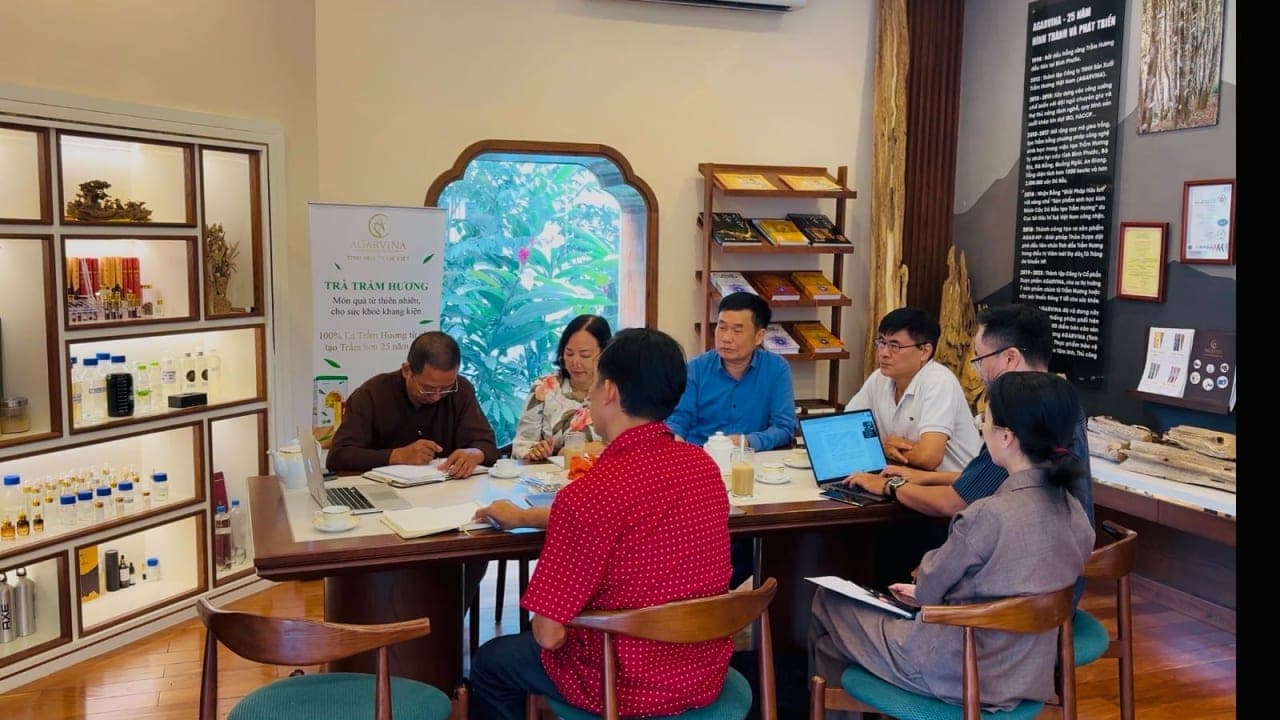
Discussing this issue, Pham Van Du stated that the Vietnam Agarwood Association has been working with the Korea Agarwood Association to find solutions to resolve obstacles related to species identification in international trade.
According to Mr. Du, both sides highly agreed on the need to promote coordination between regulatory agencies, the scientific community, and the business community to soon create a stable legal corridor for the import, distribution, and consumption of Vietnamese agarwood in the Korean market as well as other international markets.
“Resolving difficulties in species identification is not just a technical or legal story, but is also directly related to the reputation, brand, and sustainable development future of the Vietnamese agarwood industry in the global market,” Mr. Pham Van Du emphasized.
In the context of increasing agarwood consumption demand in Northeast Asian and Middle Eastern markets, many believe that early completion of the legal framework, unification of scientific identification, and strengthening Vietnam's voice in international institutions will be key factors for the agarwood industry to develop more systematically, transparently, and sustainably in the coming time.
Thảo luận (0)
✦ Hội Trầm Hương Việt Nam ✦
Join the agarwood community discussion
Comment, share, and connect with 50+ agarwood industry businesses. Register for free to become a member of the Vietnam Agarwood Association.