

“Agarwood Loss” in Aquilaria Trees: Why Does Agarwood Form and Then Disappear?
VAWA - In the agarwood industry, many growers have witnessed a paradoxical phenomenon: Aquilaria trees inoculated to produce agarwood show very good results during periodic checks after 3, 6, or 9 months, but by the time of harvest, they are left with only white wood, and the amount of accumulated oil has dropped sharply or the tree has almost "lost its agarwood".
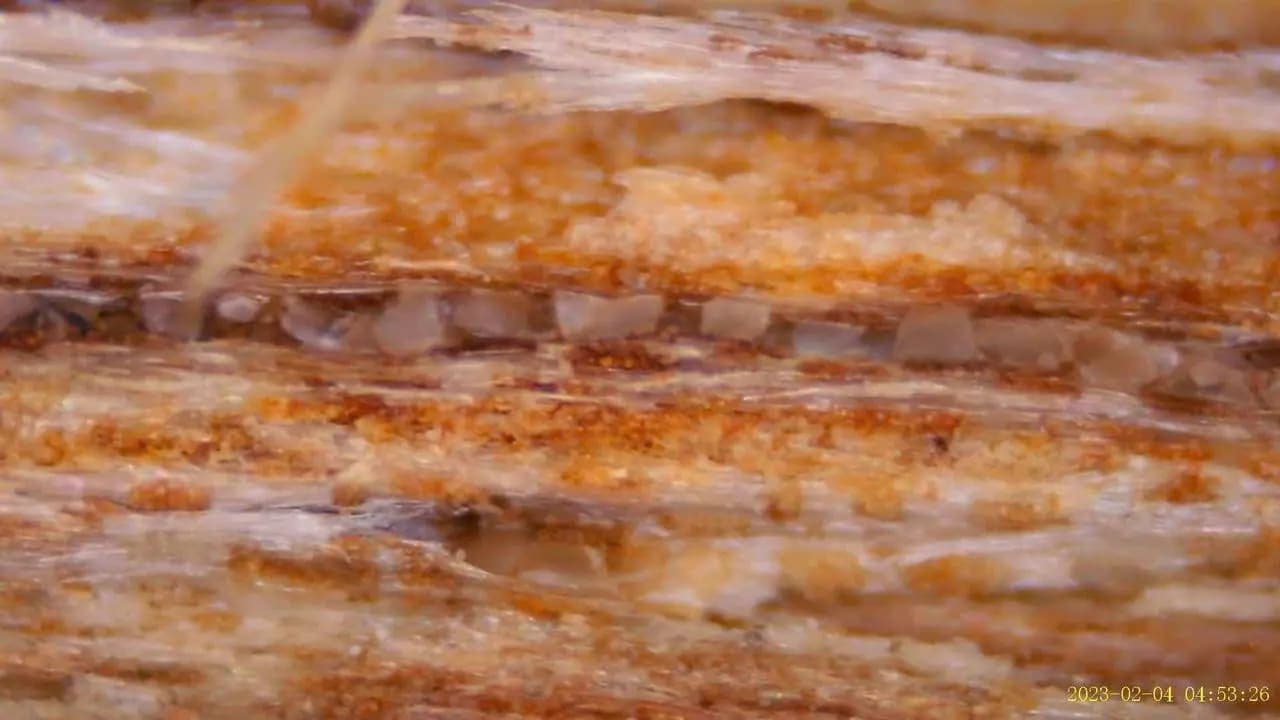
This phenomenon has long been explained by folk wisdom through terms like "young agarwood," "running agarwood," or "oil-reabsorbing tree." However, from the perspective of modern plant physiology, this is actually a complex biological regulation process directly related to the defense mechanism and energy redistribution of the Aquilaria tree.
Recent international studies show that the formation of agarwood is not a "random" phenomenon, but rather the tree's biochemical defense response to mechanical injury, microbial infection, or environmental stress.
Agarwood is essentially the tree's "biological shield"
According to many research projects, agarwood is formed when an Aquilaria tree is injured. At this point, the tree activates its endogenous immune system, producing secondary compounds such as sesquiterpenes and chromones to isolate the damaged area and combat the invasion of fungi, bacteria, or insects.
These compounds are the very components that create the characteristic fragrance and the extremely high economic value of agarwood.
In the initial stage after induction, the tree often enters a state of "biological alarm," causing the volume of essential oil to increase rapidly. This is also why many growers, when drilling for exploration, see dark oil and a clear scent, leading them to believe the agarwood formation process has been successful.
However, what few realize is that the Aquilaria tree does not maintain this defense state forever.
ROS – The "biological switch" determining the existence of agarwood
One of the key discoveries of modern plant physiology is the role of ROS (Reactive Oxygen Species).
In the Aquilaria tree, ROS acts as an intracellular alarm signal. When the tree is injured, ROS levels surge, activating a series of genes related to the synthesis of sesquiterpenes – the core component of agarwood.
Research on Aquilaria sinensis shows that ROS accumulation increases sharply in the first days after injury and then gradually declines over time. When ROS levels fall below the activation threshold, the biosynthesis of agarwood almost completely stops.
This means: if the stimulating impact is no longer strong enough or is not maintained continuously, the tree will "turn off its defense mode."
And that is the moment when the phenomenon of "losing agarwood" begins to occur.
When the tree shifts from "fighting" to "growing"
Plant biologists suggest that the Aquilaria tree always maintains two parallel metabolic states:
Defense phase.
Growth phase.
In the defense phase, the tree prioritizes using carbon and ATP to produce aromatic compounds to counter the injury. But when stress levels decrease, the tree shifts to prioritizing the growth of its trunk, leaves, and roots.
At this point, the sesquiterpene compounds that have formed are no longer maintained or accumulated strongly in the damaged area. A portion will be biodegraded or re-metabolized to serve the tree's internal energy needs.
In other words, the tree begins to "reclaim resources" to restore its growth.
This is also the reason why many areas that were once heavily saturated with oil gradually fade over time, or even lose their fragrance entirely.
Some international studies on the mechanism of sesquiterpene synthesis in agarwood trees also note that gene regulation is closely linked to defense hormones such as jasmonic acid (JA). When the JA signal declines, the ability to accumulate sesquiterpenes decreases accordingly.
"Skin regeneration" – the process that makes the agarwood oil layer disappear
In actual production, practitioners often call the phenomenon where white wood tissue reappears around the agarwood-forming area "skin regeneration" (lại da).
From a biological perspective, this is the process of callus tissue proliferation.
After a period of injury, the epithelial and meristematic cells around the wound begin to divide vigorously to seal the affected area. This process creates mechanical pressure on the thin layer of agarwood oil located between the wood tissues.
The consequence is:
the oil layer is pushed out of its original position,
dispersed into adjacent tissues,
or detached from the core area.
When cutting into the tree trunk at the time of harvest, the grower only sees light-colored wood, even though dark oil had previously appeared.
This phenomenon leads many growers to mistakenly believe the tree has "eaten the agarwood."
Not every tree retains agarwood for long
According to research documents on Aquilaria malaccensis and other Aquilaria species, the ability to retain agarwood depends on many factors:
tree age,
nutritional conditions,
degree of injury,
stress intensity,
immune response capability,
wood tissue structure,
antioxidant enzyme activity.
Some trees have a very fast oil-forming response but also recover extremely quickly. This is often the group prone to the "losing agarwood" phenomenon if the harvest time is prolonged.
Conversely, trees that maintain stable biological stress often produce a more durable oil layer and have a deeper potential for agarwood accumulation.
What is the direction to limit "losing agarwood"?
According to many experts in the field of artificial agarwood induction, controlling the "losing agarwood" phenomenon requires shifting from the mindset of "one-time injury" to "maintaining a controlled state of stimulation."
Proposed solutions include:
maintaining stress signals periodically,
controlling the rate of scarring,
monitoring leaf color changes and bark recovery speed,
periodically assessing oil density,
optimizing the harvest time before the tree shifts strongly into the growth phase.
In this, the most important factor is determining the "peak of agarwood accumulation" – the time when the amount of sesquiterpenes reaches its highest point before the reabsorption process takes place.
Many researchers believe that the future of the agarwood industry will depend heavily on biotechnology and the ability to control plant immune mechanisms rather than relying solely on traditional sensory experience.
The major challenge for the Vietnamese agarwood industry
Vietnam is currently one of the countries with a long-standing tradition of harvesting and cultivating agarwood. However, the "losing agarwood" phenomenon is still causing significant economic losses for growers.
In the context of increasing international market demand, understanding the true biological nature of the agarwood formation process is seen as the key to improving productivity and product quality.
Because ultimately, agarwood is not a "miracle" appearing in the wood, but the result of an extremely sophisticated survival battle inside the body of the Aquilaria tree.