
Need a suitable land mechanism for agarwood cultivation areas
VAWA - Based on the practical development of agarwood-producing aquilaria plantation areas, the Vietnam Agarwood Association recommends that land policies must properly recognize the long investment cycle and the specific value of the plantations, while preventing the exploitation of the model for land conversion and illegal real estate business.
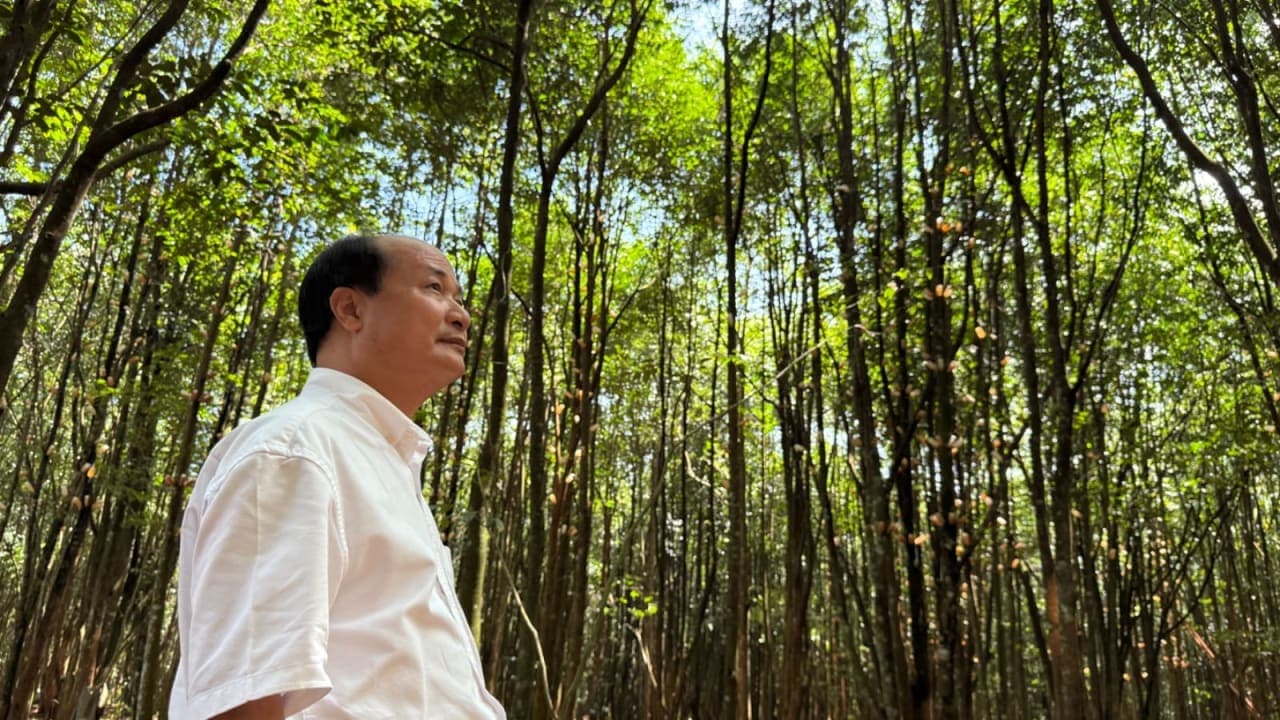
In the context of the draft Land Law (amended) gathering public feedback, the Vietnam Agarwood Association has submitted a document to the Vietnam Union of Science and Technology Associations, proposing the improvement of policies for forestry models with long investment cycles, including aquilaria plantation areas for agarwood production.
According to the Association, the value of the model lies not only in the timber or standing trees, but is accumulated through years of cultivation, agarwood induction techniques, deep processing capabilities, and linkages with product chains such as essential oils, fragrances, handicrafts, healthcare products, and experiential tourism. Meanwhile, land use terms, project durations, and crop cycles in some models are not synchronized, increasing risks for land contributors and investors.
Sufficiently stable planning for long-cycle forestry trees
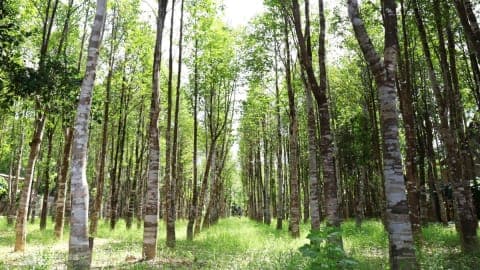
The Vietnam Agarwood Association believes that localities with suitable natural conditions need to research and designate aquilaria planting areas within land use planning and plans, synchronized with forestry planning, seedling infrastructure, primary processing, and processing. Planning must be sufficiently stable for people, cooperatives, and enterprises to pursue long production cycles, but must be based on land, water resource, environmental, and practical efficiency assessments to avoid development driven by trends.
The 2024 Land Law stipulates that individuals directly engaged in agricultural production currently using land allocated by the State within quotas can continue using it upon expiration without having to complete renewal procedures. Therefore, the issue to focus on is not petitioning for a general extension for all cases, but rather the mechanism for handling leased land, investment projects using land, or linkage models where land terms, project durations, and crop cycles do not coincide.
From this reality, the Association recommends researching transparent criteria, early processing timelines for dossiers, and asset handling plans for crops if projects are not extended. Clearly defining regulations from the beginning will reduce disputes, protect land contributors, and help investors accurately calculate project lifecycles.
The formation of large-scale raw material regions must also rely on voluntary mechanisms. Land lease contracts, land use right contributions, or production linkages must clearly define terms, rental rates, benefit-sharing mechanisms, crop ownership, land protection responsibilities, and procedures for handling plantations when contracts are terminated prior to harvesting.
According to the Association, this is a necessary barrier to prevent situations where people receive immediate benefits but lose their long-term livelihoods, while land is accumulated and then abandoned or projects stagnate. Land contributors must have access to information, participate in supervision, and enjoy benefits commensurate with the land value, labor, and shared risks.
Proper valuation of agarwood-producing plantations
Another issue of particular concern to the Association is compensation when the State reclaims land. The 2024 Land Law stipulates compensation for perennial crops based on the actual damage value of the plantation. However, if only standard crop unit prices are applied, the value of aquilaria plantations that have formed agarwood may not be fully reflected.
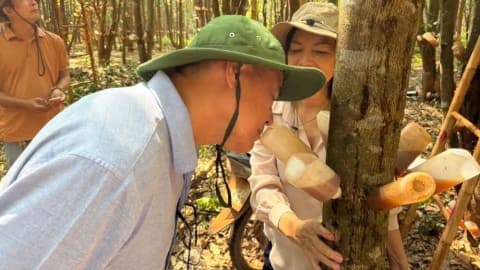
Plantation value can vary significantly depending on tree age, density, seed source, growth status, agarwood induction techniques and timing, the proportion of qualifying trees, invested costs, and product recovery capabilities. The Association proposes establishing appropriate inventory and valuation methods; valuation consulting organizations, forestry experts, and professional associations can be mobilized to provide data and critique plans.
Nevertheless, compensation levels must be determined from origin records, production logs, inventory status, and technical evidence, and cannot be automatically calculated based on expected market prices for agarwood products. This approach protects the legitimate rights of plantation owners while limiting asset inflation and false declarations.
Regarding the proposal to recognize the value of agarwood formed within trees as a registrable, mortgagable, or transferable asset, the Association believes further careful study is needed. Crops, planted forests, and legal products are assets under civil and specialized laws, but the ability to register them, use them as collateral, or value them still depends on the specific type of asset and legal documentation.
For the immediate future, it is necessary to standardize plantation records, tree inventories, technical logs, plantation area codes, and traceability. This will serve as a foundation for transactions, compensation, access to credit, and concurrently help prevent origin-unknown products from entering the market.
No paving the way for land distortion
In concentrated planting areas, the need for nurseries, material warehouses, irrigation systems, internal roads, fire prevention systems, security posts, primary processing, and storage areas is genuine. Article 218 of the 2024 Land Law opens a multi-purpose combined land use mechanism while requiring that land types are not changed, the capability to revert to the primary use purpose is not lost, and national defense, security, and ecosystem protection are guaranteed.
According to the Vietnam Agarwood Association, guiding regulations need to clarify the types of structures serving direct production, maximum ratios and scales, dossier plans, processing timelines, financial obligations, and responsibilities for restoring the original status. Items that exceed auxiliary scopes or alter primary land use purposes must still fully comply with procedures under land, construction, forestry, and environmental laws.
Product introduction activities or experiential tourism in planting areas should also only be organized in eligible locations, according to plans approved by competent authorities, limiting concrete paving and without diminishing the functions of agricultural land, forestry land, or forests.
The Association emphasizes that agarwood development must go hand in hand with genetic resource conservation, seed control, traceability, and biodiversity protection; it is strictly forbidden to use the pretext of developing planting areas to convert natural forests, divide plots, build resorts, or conduct illegal real estate business. The concept of "ecological trees," if used, should only express functional effects and development directions, not a separate type of tree or land within the legal system.
Similarly, green credit, forest environmental services, or carbon markets can only be established when models meet legal conditions; sequestration or emission reduction amounts must be measured, reported, and verified according to recognized standards. Planting trees does not automatically generate carbon credits.
From the practical realities of the agarwood industry, the Association believes this amendment to the Land Law needs to create space for high-value forestry models without lowering the barriers protecting forests, the environment, and people's rights. Policies are only feasible when clearly distinguishing land types, user entities, and land allocation or lease forms; linking economic exploitation rights with obligations to use land for its proper purpose, transparent origins, and sustainable development.